Permanent Crack Repair — Not a Quick Patch
Patch-It-Now repairs drywall and plaster cracks the right way, so they stay closed. The reason most cracks come back is simple: they get filled with caulk or spackle, which has nothing holding the two sides of the crack together. The next time the house moves with the seasons, the crack reopens. We repair cracks structurally — bridging them with tape or re-bedding the corner bead, floating wide over several coats, then texture-matching — so the wall behaves as one solid surface. It's the difference between hiding a crack and fixing it. We've done this across Jackson County since 2014, and we carry a 5.0-star rating across 83 Google reviews.
Why Walls and Ceilings Crack
Cracks are one of the most common things we're called for, and they come from a handful of normal causes:
- Settling — every house settles over time, and newer construction settles most in its first few years, opening hairline cracks at the weak points.
- Seasonal movement — Missouri's humidity and temperature swings make framing expand and contract, which flexes the drywall and reopens poorly-repaired seams.
- Roof-truss uplift — trusses lift and drop with the seasons, cracking the joint where the ceiling meets interior walls.
- Drywall tape failure — when the original tape wasn't bedded properly, the seam telegraphs a long, straight crack.
The Cracks We Repair
- Settling cracks — hairline to wider cracks that appear as a home settles.
- Stress cracks at corners — the diagonal cracks that run off the corners of doors and windows, where stress concentrates.
- Ceiling cracks & truss-uplift cracks — including the seasonal crack along the ceiling-to-wall joint.
- Corner-bead cracks — cracked or dented outside corners where the metal or vinyl bead has failed.
- Plaster cracks — in older Jackson County homes with lath-and-plaster walls, stabilized and matched to the original texture.
How We Repair a Crack So It Stays Closed
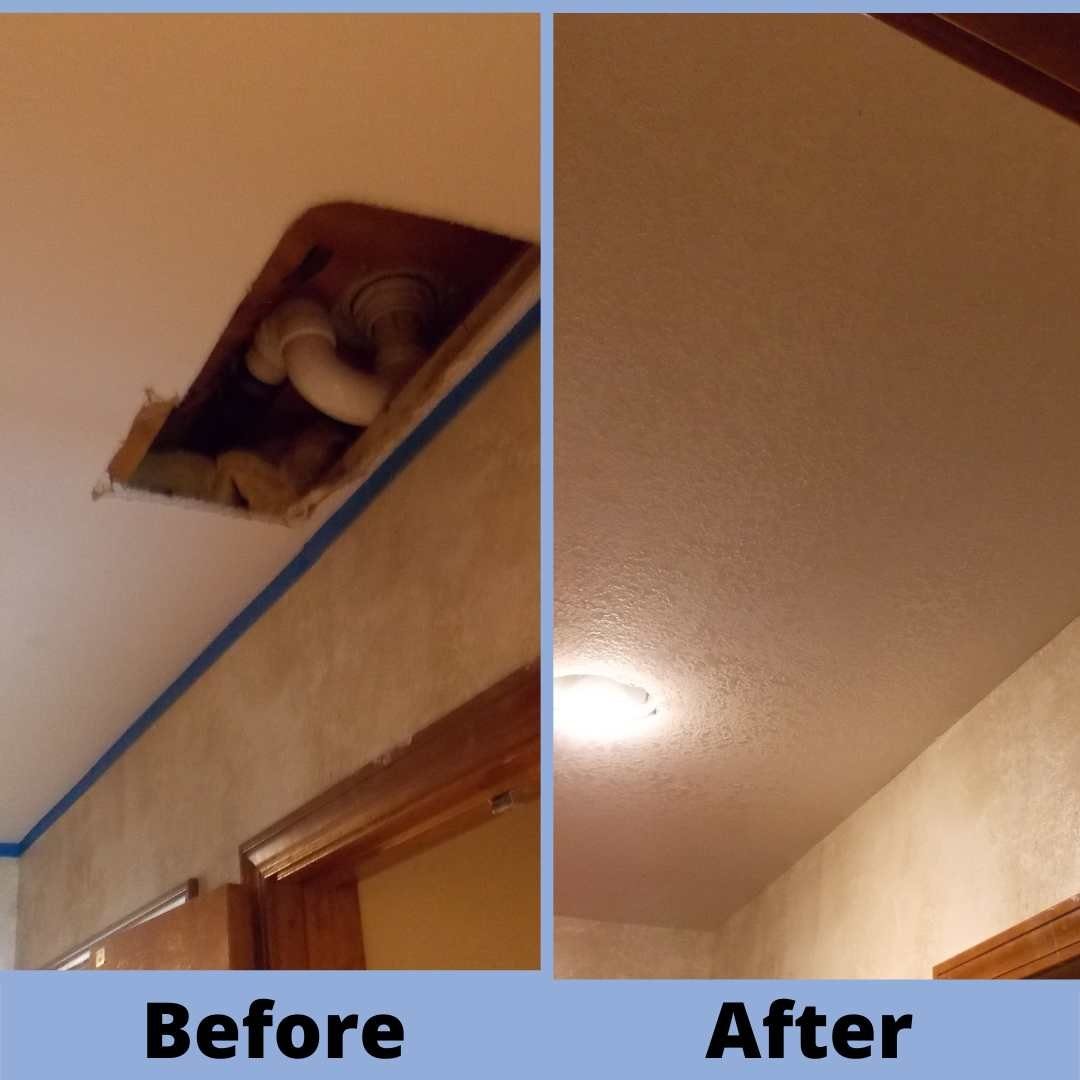
Every crack repair follows the same disciplined steps: we open and clean out the crack, embed drywall tape (or re-bed the corner bead) to physically bridge it, float the area wide with multiple thin coats of compound, sand it flat, and then texture-match the surrounding wall — knockdown, orange peel, smooth, or hand texture — before priming so it's paint-ready. Done this way, the repair moves with the wall instead of against it.
If a crack keeps coming back no matter how many times it's been filled, it's because it was filled, not repaired. Tape-and-float is the only thing that physically holds the crack closed. That's what we do.
Crack Repair vs. Hole Repair — Which Do You Need?
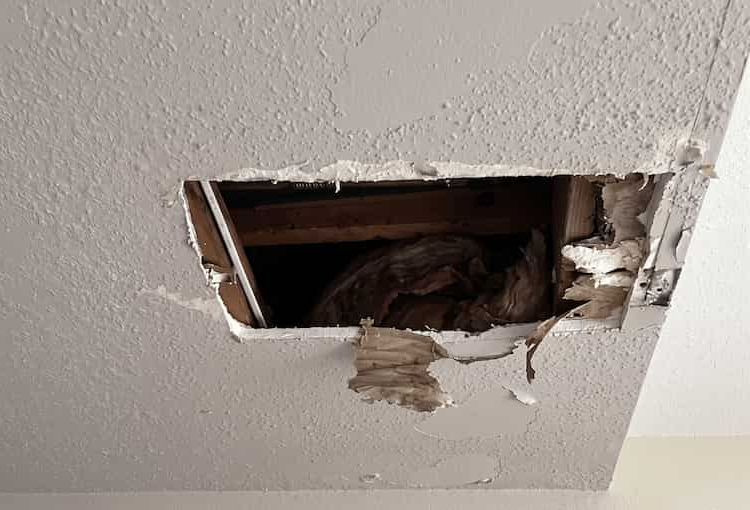
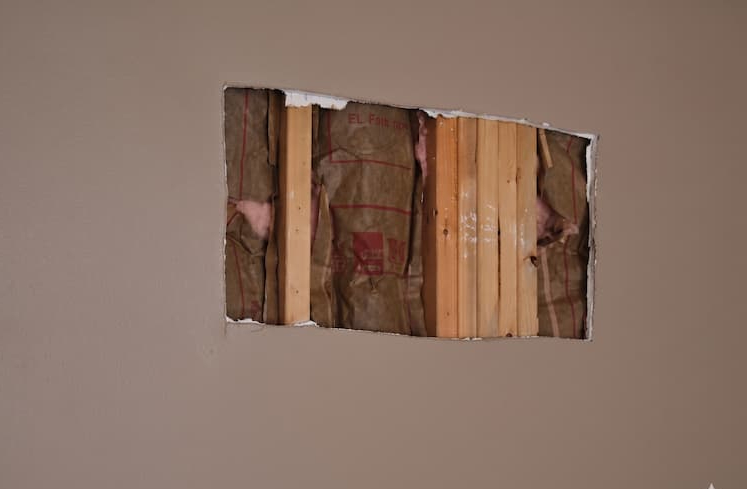
If you've got a linear crack — a line running across a wall or ceiling, or off a door or window corner — that's crack repair. If you've got an opening, a dent, or a hole (a doorknob ding, a fist hole, a plumbing access cut), that's drywall hole & patch repair. The two often show up together, and we handle both in the same visit.
What Crack Repair Costs in Jackson County
Most drywall and plaster crack repairs run $150–$550, depending on the number of cracks, their length, ceiling height, and how much texture matching is involved. Every quote is free, flat-rate, and given before work starts — see our drywall repair cost guide for the full breakdown.
Why Homeowners Choose Patch-It-Now
We're a residential drywall and plaster specialist — not a handyman or a remodeler with drywall on the side. Founder Jose has been repairing walls and ceilings across Jackson County since 2014, and the 83 five-star reviews come from real homeowners in Lee's Summit, Blue Springs, Independence, and the surrounding communities. Fully insured, on time, floors covered, dust managed, and we don't leave until the repair is invisible.
Have an older home with plaster walls? Read our guide: Why Plaster Walls Crack in Older Homes.