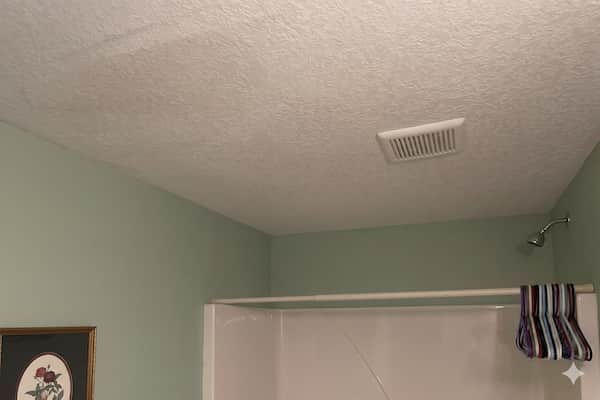
Water damage in drywall often hides behind paint until it spreads. The five most common warning signs are discoloration or brown staining, bubbling or peeling paint, soft or sagging drywall, a musty smell, and localized warping or nail pops. If you spot any of them, the order of operations matters: find and fix the water source first, let the area dry, and only then repair the drywall — sealing it properly so the stain can never bleed back through fresh paint.
The 5 Signs to Watch For
- 1. Discoloration or staining. Brown, yellow, or copper-colored rings and blotches are the classic tell — especially on ceilings under bathrooms or roofs. A stain almost always means water has already passed through the board.
- 2. Bubbling, blistering, or peeling paint. When moisture gets behind paint, it lifts off the wall. Bubbles that feel soft or a patch of peeling in one area point to water, not just old paint.
- 3. Soft, spongy, or sagging drywall. Healthy drywall is firm. If a ceiling bows downward or a wall feels soft when you press it, the gypsum core has absorbed water and lost its strength.
- 4. A musty or damp smell. A persistent musty odor in a room — with no visible cause — often means moisture (and possibly mold) behind the drywall or under it.
- 5. Localized warping or a cluster of nail pops. Bulging seams, a warped section, or several nail pops grouped in one spot can mean the framing or board behind it got wet and moved.
Spot a stain or a soft spot? Don't paint over it yet. Find the source first — a fresh coat of paint on wet, compromised drywall just hides a problem that keeps growing underneath.
What to Do If You See These Signs
The drywall is the symptom; the water is the cause. Before any repair, the source has to be found and stopped — a roof leak, a plumbing supply or drain line, an overflowing gutter, an AC condensate line, or condensation. Once it's fixed and the area has dried out, the drywall can be repaired permanently. Repairing the board before the leak is fixed just guarantees you'll be doing it again.
Why Painting Over a Water Stain Never Works
Water stains are loaded with tannins and minerals that bleed straight through ordinary paint — you'll see the ring come back within days. A lasting repair requires a stain-blocking primer that seals the area so nothing bleeds through the new texture or paint. This one step is the most common thing DIY repairs skip, and it's why so many "fixed" stains reappear.
Why Water-Damaged Drywall Usually Needs Replacement, Not Just Patching
Once gypsum board has been soaked, the paper can delaminate and the core can crumble, and damp drywall is a prime spot for mold. For anything beyond a light surface stain, the right fix is to cut out and replace the compromised section rather than skim over it. We remove the damaged board, make sure the framing behind it is dry and sealed, replace it, then tape, float, and texture-match so the repair disappears.
Common Causes in Kansas City Homes
- Winter roof leaks and ice dams — a major source of ceiling stains across the metro after a hard freeze-and-thaw.
- Aging roofs and flashing — slow leaks around chimneys, vents, and valleys.
- Burst or frozen pipes — dramatic and fast, often soaking ceilings and walls below.
- Bathroom and kitchen leaks — supply lines, drains, and tubs that seep into the ceiling underneath.
- Basement humidity and condensation — the slow kind that shows up as musty smells and soft lower walls.
If you're seeing any of these signs, we can help. See water-damage drywall repair and ceiling repair, or check typical pricing in our drywall repair cost guide.